At 23 years old, Ayikoru Flavour from Panduru Village, Yumbe District is managing a watermelon plot while running a small store that sells cassava flour. Ayikoru works with the quiet determination of earning enough to pay school fees and return to the education she left behind.
Ayikoru dropped out of school in Senior (2) two with limited options other than turning to the land. She started by growing cassava and maize whose proceeds she used for opening a modest store and started selling cassava flour with a top up loan from a local savings group as her start-up capital.
The progress of the enterprises remained slow as cassava takes a long time to mature, and she lacked access to technical knowledge and extension support to venture into high value crops such as watermelon. These challenges kept the enterprise small and her dream of returning to school far from reality.
Ayikoru’s turning point came through the SIYEP Program. She joins Alemai Young Women Group and completes six months of practical training in watermelon production with learnings on how to plant, tend to crop, determine maturity, manage the harvest and market the fruits.
Today, Ayikoru grows watermelon alongside her cassava flour business. She personally manages her plot, putting into practice the skills she gained from the group demonstration garden.
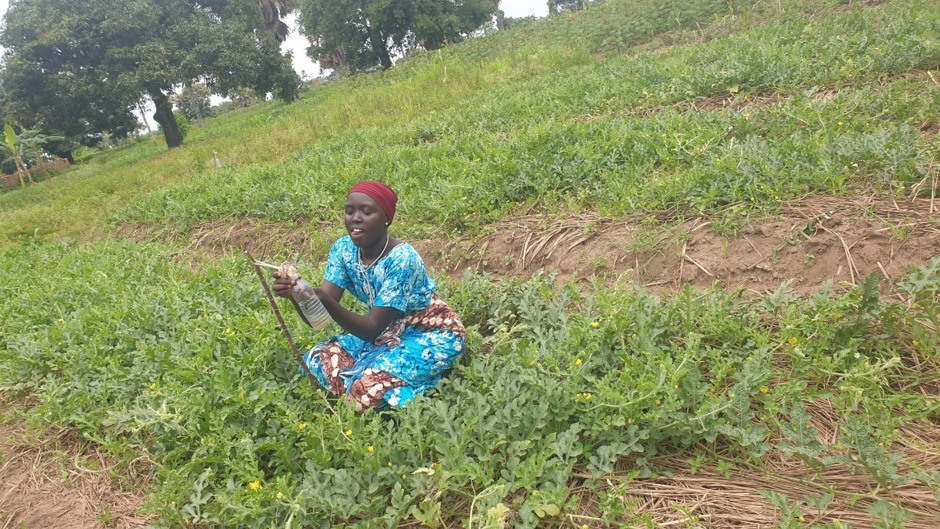
Ayikoru at the farm installing pheromone trap
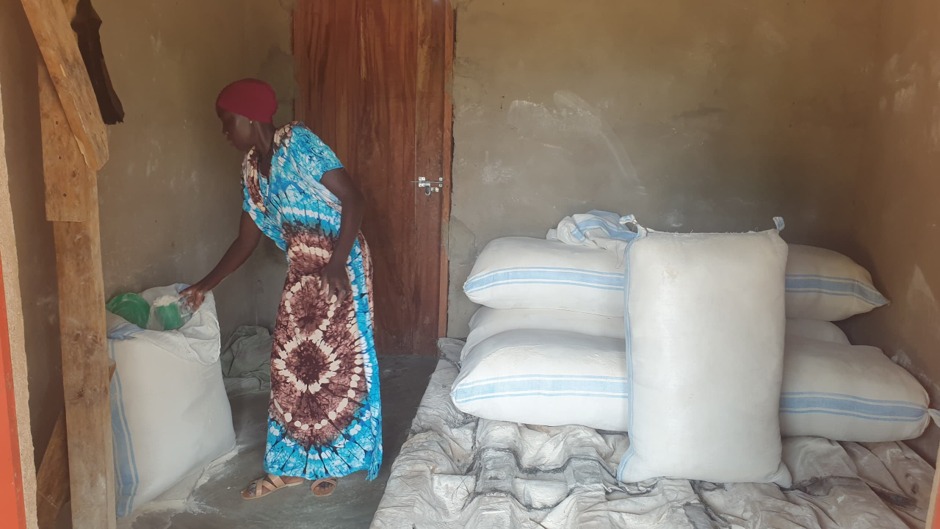
Ayikoru at her shop
The combination of faster-maturing, higher-value crop and her existing small business gives her a realistic hope toward the school fees she needs. What began as group training has now become an enterprise she owns and manages.
Ayikoru’s story stands as clear evidence that with the right knowledge and support, determined young people can turn limited beginnings into purposeful progress.
This intervention is part of SIYEP Program, implemented by Omia Agribusiness Development Group Limited. Funded by Mastercard Foundation through Agency for Accelerated Regional Development, the initiative delivers practical skills training in the districts of Yumbe, Obongi, Adjumani, and Nwoya.